
An Optical Time Domain Reflectometer (OTDR) is the fastest way to locate breaks, bends, and connector loss in optical fiber networks. But OTDR specs can be confusing: wavelength, dynamic range, dead zones, and PON/FTTH testing modes all affect real-world performance.
OTDR Specs Explained
- Dynamic range: A higher dB value lets you test longer fibers. 32/30 dB is common for metro/access links; 40/38 dB is better for long-haul or PON splits.
- Wavelengths: 1310/1550 nm covers standard SM fiber. Quad models add 850/1300 nm for multimode data centers, and 1625 nm for live-PON troubleshooting.
- Event dead zone: Short dead zones let the OTDR see two closely spaced events, important in patch-panel-rich environments.
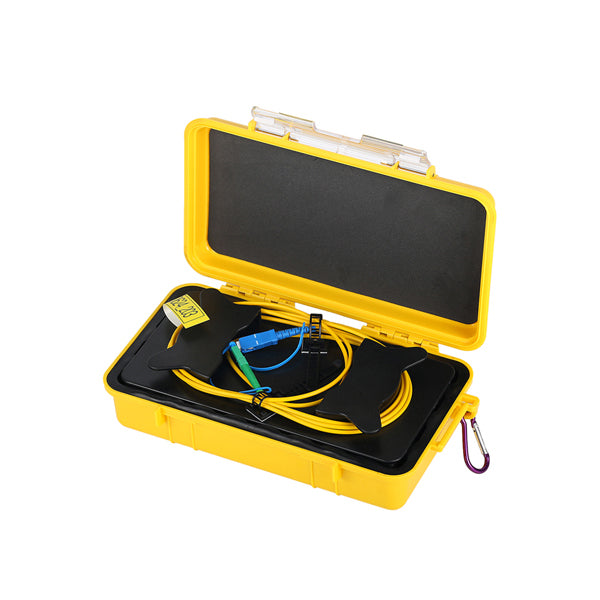
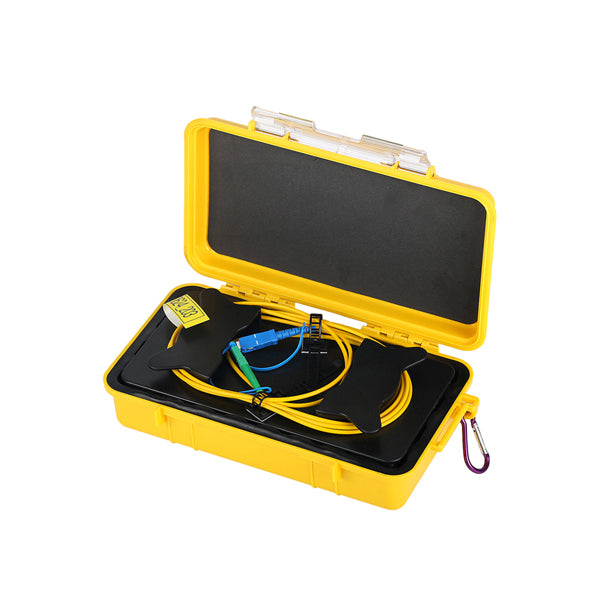
- Launch cable / dead-zone eliminator: Always use a launch cable to mask the OTDR's own connector and get clean near-end traces.
OTDRs and Launch Cables at Cpostore
Explore our OTDR collection and OTDR Fiber Launch Boxes for handheld, PON-ready, and quad-wavelength testers.


Need Help Decoding OTDR Traces?
Our team can help you select the right OTDR model, launch-cable length, and adapter set. Contact info@cpostore.com for technical support.